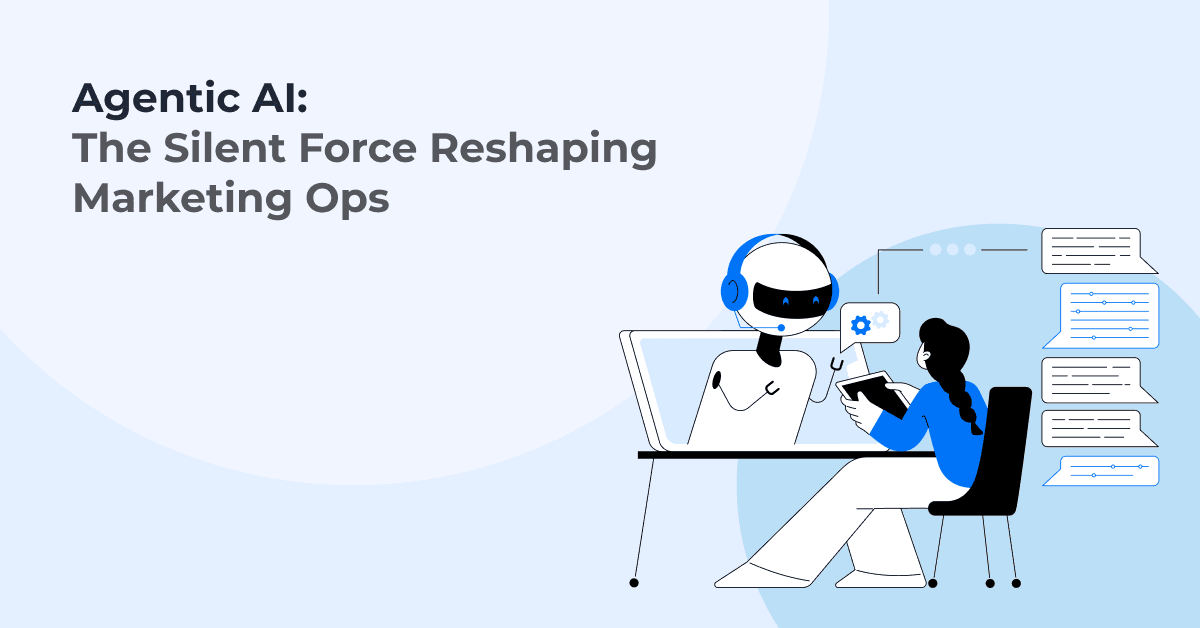



“Wait, so this thing just… does it? Like, by itself?”
Yes. And no, it’s not magic. It’s called Agentic AI and it’s the next evolution of marketing automation you didn’t know you were waiting for.
If you’ve been throwing AI at your ops but still relying on dashboards, approvals, and 14-tab workflows to get things done, it’s not that AI failed you. It’s that you’ve been using AI like a calculator in a world that now runs on co-pilots.
Agentic AI doesn’t just assist. It understands your goals, makes decisions, takes action, and adapts over time all without needing you to prompt it every five minutes. It’s not “tool” energy. It’s teammate energy.
So, how does ow does Agentic AI work in marketing ops? And what’s the smartest way to test it without getting stuck in a pilot purgatory?
Let’s break it down.
So, What Is Agentic AI, Really?
At its core, Agentic AI is an autonomous system that can plan, decide, and act on your behalf. Unlike traditional AI that needs constant direction (think: “Hey Chatbot, answer this question”), Agentic AI understands your bigger goals and breaks them into tasks it handles by itself.
Imagine an AI agent that:
- Spots when a lead goes cold and triggers a re-engagement flow.
- Rewrites ad copy based on real-time click-through data.
- Predicts churn and automatically nudges customer success to step in.
This isn’t just automation — it’s autonomy. It’s AI that runs your marketing workflows while you focus on the big moves.
Agentic AI vs Traditional AI: What’s the Real Difference?
Traditional AI waits for instructions. Agentic AI acts with autonomy. It doesn’t just answer your questions, it figures out what needs to be done and gets on with it.
| Traditional AI | Agentic AI |
| Responds to prompts | Sets its own tasks |
| Static workflows | Dynamic decision-making |
| Needs manual follow-up | Self-adjusts based on outcomes |
| Data analyzer | Goal-driven operator |
It’s like comparing a search engine to a personal assistant who already booked your Uber, sent the invite, and rescheduled your dentist appointment.
Real-Life Agentic AI Wins
The power of agentic AI becomes clear when you see it in action. Here are companies already leveraging autonomous AI agents to transform their operations:
- Salesforce’s Agentforce: Saks Fifth Avenue rolled out “Sophie,” an autonomous agent tied into Salesforce Customer 360. In under a week, Sophie handled customer queries, managed inventory lookups, and even scheduled pickups.
- Wiley: Saw a 40% faster case resolution using Agentforce compared to basic chatbots forbes.com.
- Heathrow Airport: Achieved 90% accuracy on traveler queries, agentic bots working quietly behind the scenes.
Why Most AI Pilots Flop (and How You Can Do It Differently)
We get the hype. You see what Agentic AI could do, and you’re ready to test the waters. So, you launch a pilot, and it fizzles. No scale. No real impact. Just a cool demo collecting dust in some internal wiki.
It’s not just you. A ton of teams fall into the same trap trying to pilot Agentic AI without a proper playbook. Here’s where things usually go sideways:
- No clear use case
- Misalignment between marketing and IT
- Poor data hygiene and bad AI decisions
- No plan for governance or optimization
The result? A half-baked agent that never sees the light of day.
Setting Up an Agentic AI Pilot That Actually Works
A successful AI pilot needs more than just tech, it needs intention. Here’s your roadmap to building an agent that delivers real results:
- Get laser-specific with the use case
Pick one marketing task with high volume and low creativity (think lead routing or content tagging). This makes it easier to measure success and scale later.
- Design with the end in mind
Don’t just “see what happens.” Define what good looks like. What does success mean? More conversions? Faster response times? Set the goal now, not post-mortem.
- Loop in the right people early
Agentic AI lives at the crossroads of marketing, ops, and tech. You need buy-in from everyone so get the right humans in the room before you deploy digital ones.
- Pilot fast, optimize faster
Ship something small, but real. Then track how it performs, gather feedback, and tweak as you go. Agentic AI learns over time, you should too.
Agentic AI + Salesforce: Why It’s a Power Pair
Salesforce isn’t just AI-friendly, it’s agent-ready. With its robust AI stack and low-code tools, you can:
- Spin up intelligent workflows with Einstein Studio
- Launch prompt-driven assistants using custom models
- Create explainable dashboards so teams trust what the AI is doing
- Close the loop with feedback-driven iterations
The platform’s comprehensive ecosystem makes it easier to deploy, monitor, and scale agentic AI solutions across your entire marketing operations stack. Combined with the right strategic approach, this creates a foundation for sustainable AI transformation that goes beyond pilot projects to deliver measurable business impact.
The Future Is Autonomous (And It’s Here)
Agentic AI isn’t just about doing things faster—it’s about fundamentally changing how marketing operations work. Instead of managing campaigns, you’re orchestrating intelligent systems that manage themselves. Instead of analyzing data, you’re setting strategic objectives while AI handles the execution.
The companies already experimenting with agentic AI aren’t just gaining efficiency—they’re building competitive advantages that compound over time. Every day their systems get smarter, more autonomous, and more aligned with business goals.
The question isn’t whether agentic AI will transform marketing operations. It’s whether you’ll be leading that transformation or catching up.
Want to Explore What Agentic AI Could Mean for Your Marketing Operations?
At Growth Natives, we help teams navigate the intersection of AI innovation and practical business results. From Salesforce AI enablement to custom automation strategies that actually work, we’ve got the expertise to turn cutting-edge tech into competitive advantage. Want to chat about what this might look like for your team? Drop us a line at info@api.growthnatives.com—we’d love to explore the possibilities with you.
Statistics references:
- Forbes
- Salesforce